

Choosing the Right Tailings Dewatering Technology for Dry Stacking
Dry stacking only works when the tailings come out dry enough to handle, place, compact, and keep stable. If the dewatering step falls short, the whole storage plan becomes harder, wetter, and more expensive.
For mines under pressure to reduce water use, limit dam risk, and meet tighter closure expectations, the choice of tailings dewatering technology is a design decision, not just an equipment purchase.
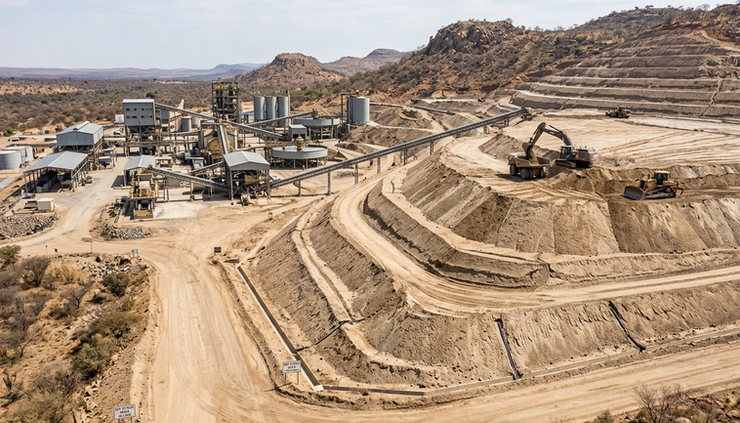
Start with the tailings, not the machine
The best technology depends on the material. Tailings from gold, platinum, copper, iron ore, coal, and mineral sands all behave differently. Particle size, clay content, mineralogy, slurry density, and water chemistry affect how quickly solids settle and how well water can be removed.
Fine particles and clays are usually the hardest to dewater. They hold water, blind filter cloths, and slow cycle times. Coarser tailings often drain more easily, but they still need testing before a plant is specified.
A good test programme should check:
Particle size distribution
Solids concentration in the feed
Settling behaviour
Filtration rate
Final cake moisture
Shear strength for stacking
Reagent needs
Water recovery quality
Lab tests are useful, but they are not enough on their own. Pilot testing gives a clearer picture of real throughput, cloth life, power use, and operator demands.
Match the technology to the dry stacking target
Most dry stack projects use a combination of thickening and filtration. Thickening removes free water first, then filters produce a cake that can be conveyed or trucked to the stack.
Technology | Where it fits best | Main trade-off |
High-rate or high-density thickener | Pre-concentration before filtration | Lower cost per cubic metre, but cannot usually reach stackable dryness alone |
Paste thickener | Higher underflow density for paste or filtered tailings feed | Needs careful control and suitable rheology |
Belt filter | Larger tonnages with moderately easy-draining tailings | Cake moisture may be higher than pressure filters |
Vacuum disc or ceramic filter | Fine mineral concentrates and some tailings streams | Performance depends strongly on mineral type and particle size |
Filter press | Low cake moisture and strong water recovery | Higher capital cost and batch operation |
Belt press | Some fine tailings and lower-pressure duties | Often needs conditioning and close control |
For many dry stacking schemes, filter presses are selected when low moisture and geotechnical stability matter most. Belt filters can suit high-volume operations where the tailings drain well and the stacking design can handle a slightly wetter cake.

Look beyond moisture content
Moisture is only one part of the decision. A cake that meets a target percentage in the plant may still fail if it shears, pumps poorly, clogs conveyors, or re-wets during rain.
The design should also consider:
Trafficability
Can haul trucks, dozers, or conveyors place the material without bogging down?
Water recovery
How much water returns to the plant, and is the quality suitable for reuse?
Energy demand
Pressure filtration can use more power than simpler systems, which matters in South Africa’s power-constrained mining environment.
Maintenance
Cloth changes, plate wear, vacuum components, and reagent systems all affect availability.
Scale-up risk
A small gain in dryness may not justify a large rise in cost or plant complexity.
Build the system around reliability
Dry stacking needs steady operation. If the dewatering plant stops, tailings have nowhere to go unless the mine has surge capacity or an alternate deposition route.
That makes the supporting systems as important as the filter itself. Feed tanks, pumps, flocculant make-up, compressed air, wash water, conveyors, and cake handling must all match the duty. The plant also needs enough redundancy for cloth washing, maintenance, and peak production.
Climate matters too. In wetter regions, the stack design may need better drainage and stricter moisture control. In arid areas, water recovery may carry more value, but dust control can become a bigger operational issue.
Make the choice with test work and life-cycle cost
Choosing the right tailings dewatering technology for dry stacking means balancing recovery, stability, cost, and risk. The lowest capital cost is not always the lowest project cost. Poor filter performance can increase haulage costs, slow placement, reduce water return, and create long-term closure problems.
A sound selection process compares options using tested data, not catalogue values. The best solution is the one that produces a stable stackable material, runs consistently, and fits the mine’s water, power, and closure plan.


Comments